

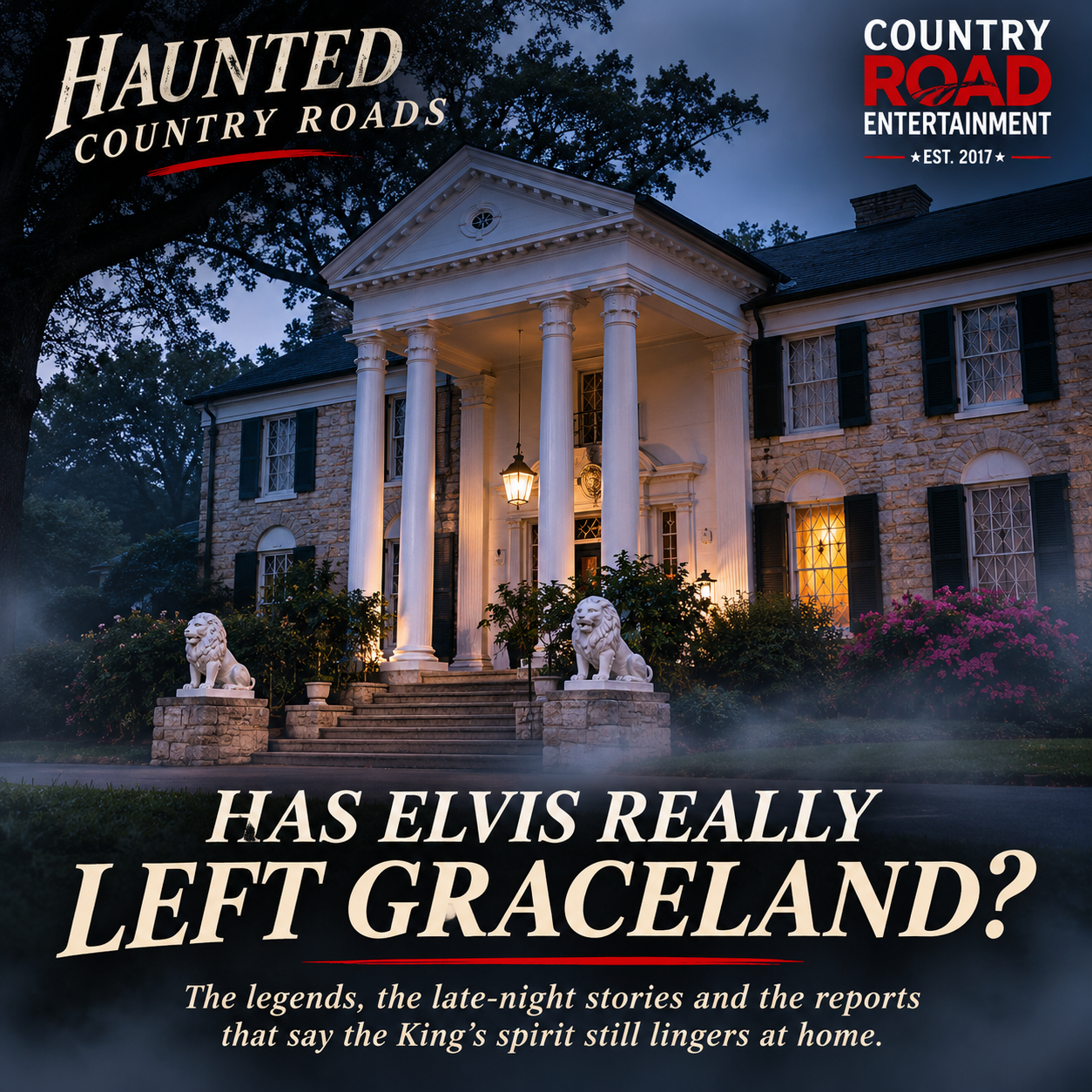
Nearly 50 years after Elvis Presley’s death, Graceland still invites a question that reaches beyond the music: has the King really left his Memphis home? For this installment of Haunted Country Roads, we return to the strange experiences described by longtime cook and housekeeper Nancy Rooks—and the real history behind the mansion’s enduring pull.
By Eddie Smith | Country Road Entertainment
A home before it became a legend
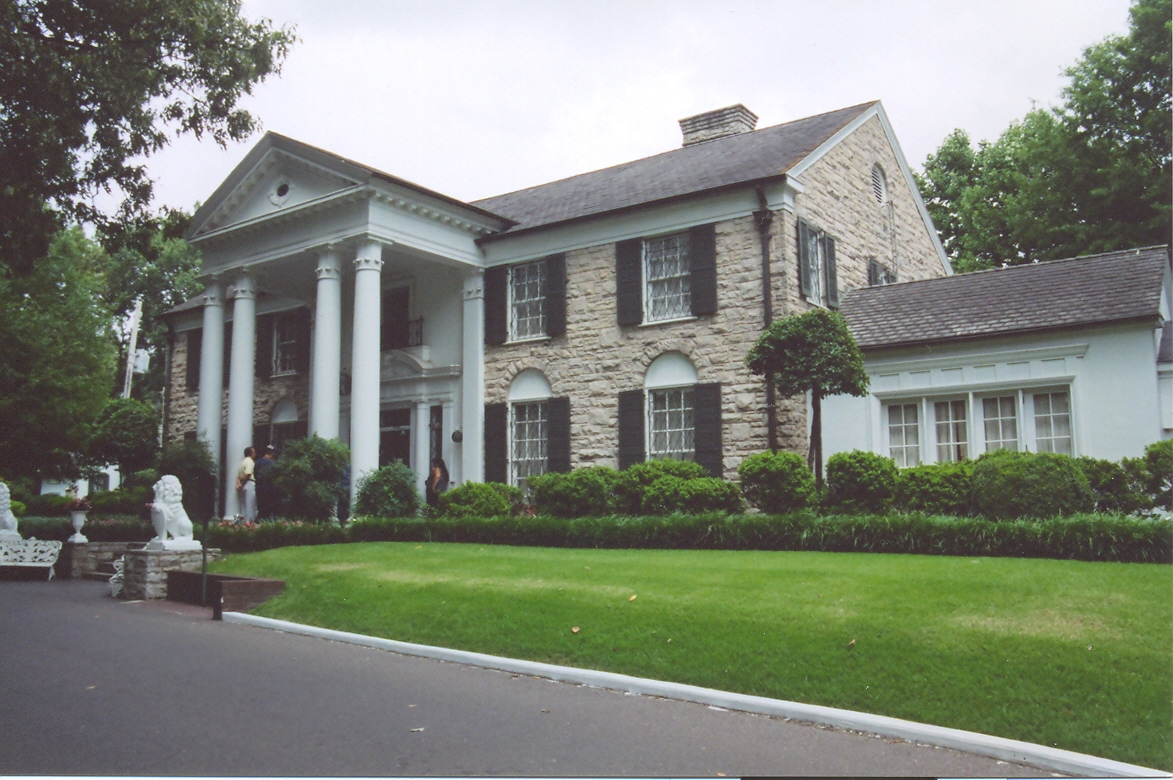
The white columns are instantly recognizable, but Graceland’s story began before Elvis. According to the estate’s official history, the mansion was built in 1939 for Ruth Brown Moore and Dr. Thomas Moore. Its name came from Grace, a relative of the family who had owned the larger property.
Elvis bought Graceland in the spring of 1957, when he was 22. Despite the demands of touring, movies and life in the public eye, the Memphis property remained his home base. He died on August 16, 1977. Graceland opened to public tours in 1982, giving fans a way to step closer to a life they had previously known through records, screens and concert stages.
Nancy Rooks’s account: lights, footsteps and a startled awakening
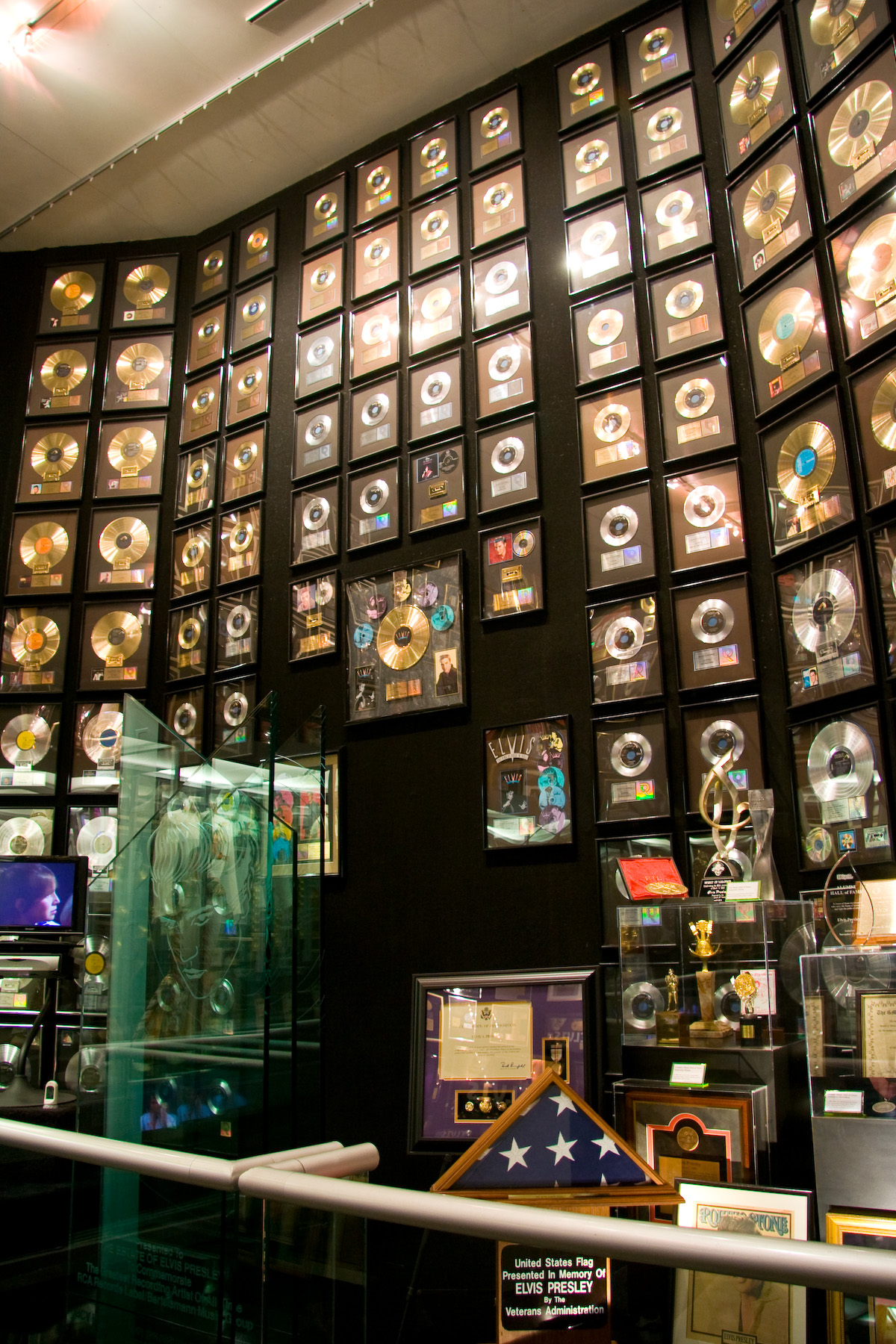
Rooks began working at Graceland in May 1967 and continued working for the family after Elvis died. In an interview with Gary James, she recalled cleaning the trophy room at night while the lights flashed on and off. She said she addressed Elvis aloud, asking him to leave the lights alone so she could see.
Her most striking story involved resting on a platform among the displayed stage outfits. Rooks said she felt someone shake her foot, jumped up and saw nobody. She interpreted the experience as Elvis waking her so she would return to work. She also described footsteps on the staircase that she associated with his mother, Gladys.
Those are Rooks’s reported experiences and personal interpretations. The interview documents what she said; it does not establish that Elvis or a family member caused the events.
Why this story stays with people
A ghost story carries a different weight when its storyteller knew a place as a workplace and a home. Rooks’s account brings the mystery down to ordinary details: cleaning after dark, trying to see, taking a brief rest. Readers do not need an apparition at a window to picture the uneasy feeling of suddenly wondering whether someone else is in the room.
That familiarity also calls for care. A sincere memory and a proven explanation are different things. No paranormal cause is established by the material cited here, and it would go beyond the evidence to present these stories as confirmation of a haunting. Their place in the series is as attributed accounts, alongside a documented historic setting.
The history is powerful enough to make the trip
For music fans, Graceland offers another kind of lingering presence: the connection between an artist’s public work and the private spaces that gave it a home. A house can hold that meaning without a supernatural explanation. The architecture, preserved possessions and stories of the people who worked there give visitors plenty to consider in daylight.
If you plan to visit, use Graceland’s official website for current tour information, access rules and tickets. The ghost stories are part of the folklore surrounding the property, rather than a promise of a paranormal experience on a tour.
What do you think: could Elvis’s spirit still be at Graceland—or does the feeling come from the history and memories the home holds?
Keep exploring Haunted Country Roads, including the legend of Room 18 at the St. James Hotel and Eddie’s firsthand experience at Flagstaff’s Hotel Monte Vista.
Haunted Country Roads explores the places where history, mystery and the unexplained meet. Country Music Lives Here.
Sources and image credits
- Gary James’s interview with Nancy Rooks: employment background and her accounts of the lights, foot-shaking and footsteps.
- Graceland’s official history and About Graceland: mansion background, Elvis’s purchase, death date and public opening.
The CRE intro graphic is an AI-assisted editorial illustration previously used with this story on Facebook. It is not documentary photography or evidence of a haunting. Body photographs retain the licenses linked in their captions; no endorsement is implied.